What Do Capacitors Do in Induction Heating?
Selection & quality · 3 min read
Prepared by HAOQI
Why does the metal heat up?
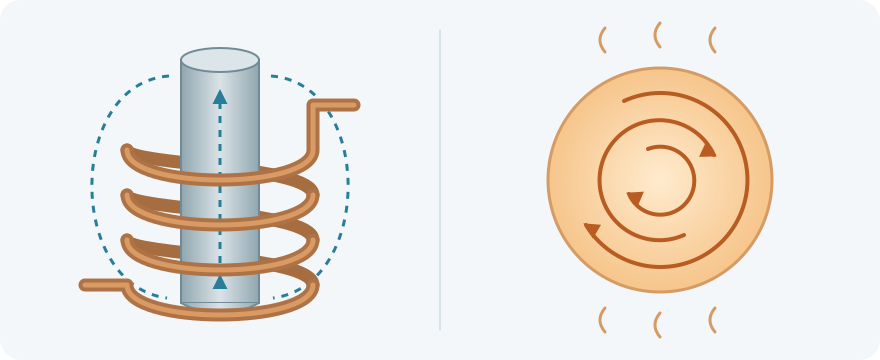
Alternating current in a coil produces a magnetic field that changes over time. When an electrically conductive metal workpiece is placed in this field, circulating currents called eddy currents arise inside it. The metal’s electrical resistance turns their energy into heat, so heat is generated in the workpiece itself. In some ferromagnetic materials, hysteresis losses also contribute.[1]
How do the capacitor and coil work together?
A coil stores energy in a magnetic field; a capacitor stores it in an electric field. In a resonant circuit, energy can pass repeatedly between them. The power supply replenishes the energy used to heat the workpiece and cover system losses. The capacitor does not create the energy needed for heating.[2]

The capacitor also helps the coil operate at a suitable frequency. In a simple series circuit, the coil and capacitor have opposing effects on alternating current. At one particular frequency these effects cancel, helping establish the current needed for heating. This condition is called series resonance. With the coil and workpiece fixed, capacitance influences this resonant frequency. Real equipment also uses parallel and other circuit arrangements. The operating frequency must suit the power supply’s control method and is not always exactly the resonant frequency.[3]
Why do operating conditions matter?
Workpiece position offers a simple example. Moving the same piece of metal within the heating coil can change how strongly the two interact through the magnetic field. This can change the circuit’s resonant frequency. A capacitor therefore needs to be considered together with the coil, workpiece and supply.[1]
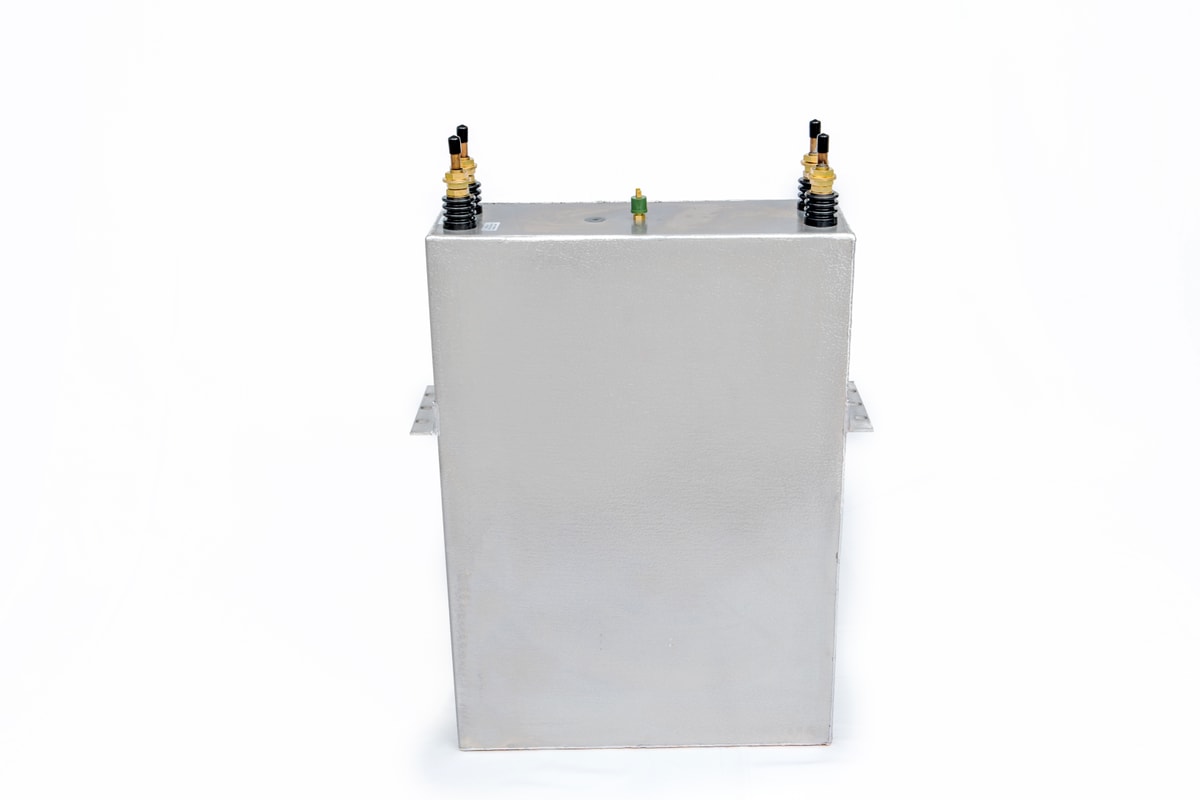
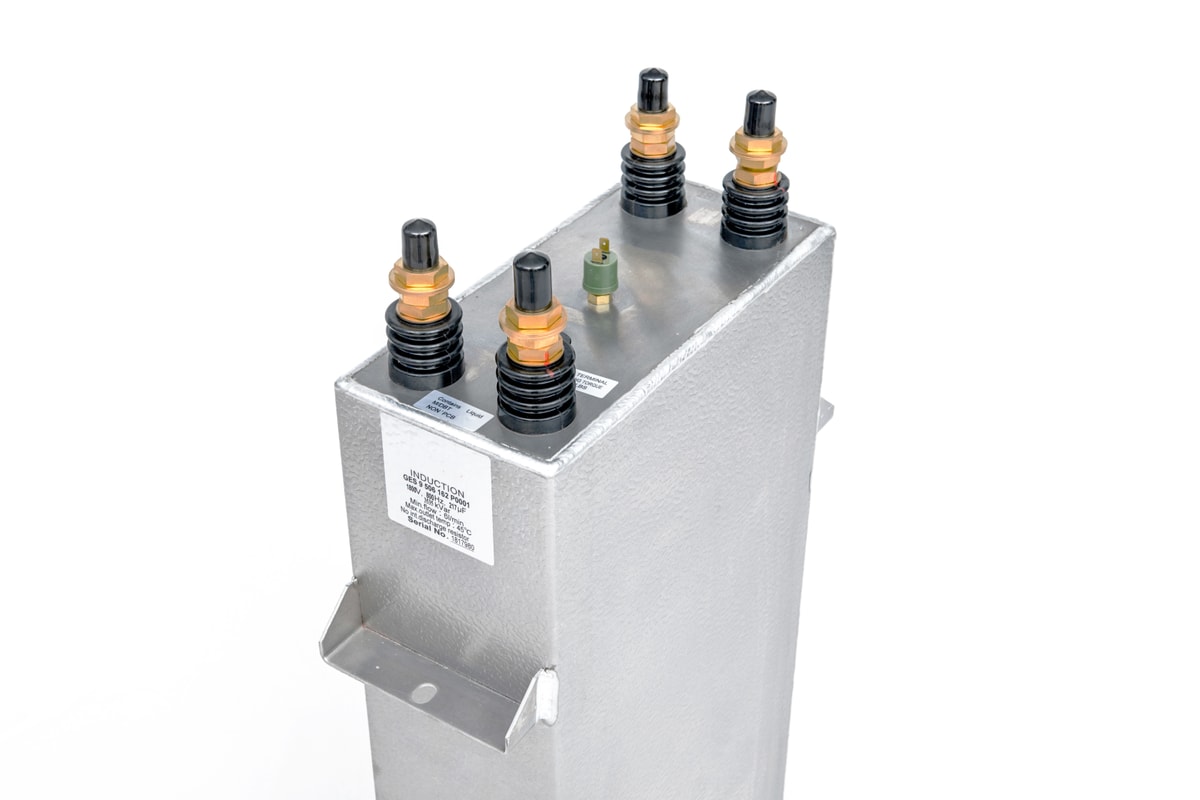
Capacitance affects how the circuit works together, while AC voltage, current and cooling conditions affect sustained operation. This helps explain the different constructions and cooling arrangements used for induction heating capacitors: the aim is to suit the operating conditions, rather than simply increase capacitance.
Academic research references
These papers support the explanations of heating, resonant circuits and operating conditions. Their experimental parameters are not ratings for the products on this website.
- Esteve, V.; Bellido, J. L.; Jordán, J. (2024). State of the Art and Future Trends in Monitoring for Industrial Induction Heating Applications. Electronics, 13(13), 2591. Introduction and Section 2.1.
- Madzharov, N.; Hinov, N. (2023). Analysis and Design of Resonant DC/AC Converters with Energy Dosing for Induction Heating. Energies, 16(3), 1462. Section 2.
- Esteve, V.; Jordán, J.; Bellido, J. L. (2025). Optimizing the Efficiency of Series Resonant Half-Bridge Inverters for Induction Heating Applications. Electronics, 14(6), 1200. Sections 2.1–2.2.